You are hereNews
News
PACHA passes resolution against criminalising HIV transmission
At its February meeting, the US President’s Advisory Council on HIV/AIDS (PACHA) passed a resolution calling on the federal government to take a leadership role in eliminating the criminalization of HIV in the U.S. Many scientists and civil society groupings (such as the HIV Prevention Justice Alliance) have long opposed harmful and counterproductive laws that criminalize HIV in the U.S. and elsewhere.
This resolution represents a significant step towards eliminating such laws. Read more about the campaign to end criminalisation of HIV.
Video: Nicoli Nattrass in conversation with Nathan Geffen about her new book "The AIDS Conspiracy: Science Fights Back"
The video below is of AIDSTruth contributors Nicoli Nattrass and Nathan Geffen in conversation at the launch of Prof Nattrass's book "The AIDS Conspiracy: Science Fights Back". It was recorded on Wednesday 30 May 2012 at The Book Lounge in Cape Town. Video courtesy of the Centre for Social Science Research.
Death by denial: Brian Deer on the believers who continue denying HIV causes AIDS
Brian Deer writes in The Guardian:
Karri Stokely is a poster girl for a different way to look at health. After receiving an Aids diagnosis in 1996, at the age of 29, she was treated for 11 years with a cocktail of drugs. But then she saw an internet video saying that HIV was a hoax, stopped taking her medicines – and felt terrific.
"I'm not getting any answers from the mainstream as to why I'm healthy, and why my husband is negative, and why I can quit these drugs," she explains in her own video, which is currently being promoted online. "I think it's a crime. It's crimes against humanity."
Her doctor was aghast – HIV treatment is for life. "He looked me right in the eyes and said: 'You have done a very stupid thing, and you will be dead very soon,'" Stokely recalls. "My response to him was: 'That's funny, because right now I'm feeling pretty good.'"
That was in April 2007. She died four years later, so her comments are a postcard from the past. "Karri Stokely passed away on April 27th 2011," explains a website run by London journalist Joan Shenton. "She said she wouldn't go quietly so we are keeping her moving interview below on our homepage."
But Stokely's path (via pneumonia) was already well trodden. Dying in denial is a phenomenon.
Remembering Winstone Zulu
Zambian AIDS activist Winstone Zulu died on 12 October 2011. Zulu was for a time taken in by Thabo Mbeki's AIDS denialism -- and nearly died as a result -- but became a tireless campaigner against denialism and for people living with HIV/AIDS after antiretrovirals restored his health. Below is the Treatment Action Campaign's tribute to Zulu. Also see the Treatment Action Group's statement.
He was a brave AIDS activist who rebelled against Thabo Mbeki's AIDS denialism
14 October 2011
Winstone Zulu, the first Zambian to live openly with HIV and an outspoken proponent for the rights of people with HIV and TB, died on 12 October 2011. The Treatment Action Group (not to be confused with us, the Treatment Action Campaign) has written a moving tribute to Winstone: http://www.treatmentactiongroup.org/winstone-zulu [1]
We express our condolences to Winstone's family and friends.
Winstone was a leading figure in the Network of Zambian People Living with HIV/AIDS (NZP+) and one of the founders of the Pan African Treatment Access Movement.
We wish to pay tribute to Winstone by recalling his struggle with and against AIDS denialism. Winstone was open about his HIV status from the early 90s. In 1997 he started taking antiretroviral treatment.
HIV denialism has taken too many lives - Ken Witwer and Seth Kalichman
In the wake of HIV-positive boxer Terry Morrison's bid to fight in Quebec, the Montreal Gazette published a highly inaccurate and irresponsible piece by Terry Michael, a well-known AIDS denialist. It is clear that denialists are attempting to exploit Morrison's tragedy for propaganda purposes. While it is usually not a good idea to 'debate' denialists, it was important to counter the misinformation spread in a prominent newspaper. Two articles by scientists set the record straight and warned Gazette readers about the dangers of AIDS denialism:
- HIV denial is fatal – Norbert Gilmore (McGill University)
- HIV denialism has taken too many lives – Ken Witwer (Johns Hopkins University) and Seth Kalichman (University of Connecticut)
Witwer and Kalichman's piece is embedded below.
What was Anthony Mbewu's role in the collapse of the Global Forum for Health Research?
Beverly Patterson Steams writes on SciDevNet:
Poor countries striving to improve their health systems deserve better than the unexplained implosion of the Global Forum for Health Research, argues Beverly Peterson Stearns.
Barely a year ago nearly 1,000 people from 80 countries gathered enthusiastically at the Palacio de Convenciones in Havana, Cuba, under the banner 'Innovating for the health of all'. More than half came from low- and middle-income countries. They were attending the annual meeting of the non-profit organisation the Global Forum for Health Research (GFHR), eager to hear about inventive and effective ways to conduct research, and urgently seeking to improve health in their countries.
Now, less than a year after taking office, the forum's executive director, Anthony Mbewu, has resigned, and the forum itself is in failing health. The prognosis is poor. Very few remain in its Geneva secretariat. Many employees have quit, been fired, or have retired early.
WBAI: Do not put Gary Null's dangerous show on the air (Sign on)
A large number of organisations and individuals have signed this letter to the WBAI management asking them to reverse a decision to restore supplement-entrepreneur Gary Null's show to WBAI radio. You can sign on by emailing [email protected].
To: Tony Bates, Interim Program Director
Berthold Reimers, Interim General Manager
Mitchel Cohen, Local Station Board Chair
Arlene Englehardt, Pacifica National Board and Executive DirectorTo whom it concerns:
We are writing as individuals and organizations who are deeply distressed by WBAI's recent restoration of supplement-entrepreneur Gary Null to the airwaves of WBAI Radio five days a week.
We are gravely concerned about this prospect and the consequences for people at risk of and living with HIV. Mr. Null and his frequent radio guests support the notions, among others, that HIV does not play a role in causing AIDS; that the disease is not transmitted sexually or via dirty needles; that HIV tests are meaningless; and that antiretroviral drugs are not only poisonous but can actually cause AIDS. Legitimate concerns and grievances about the pharmaceutical industry are eclipsed and diminished by this life-threatening stance.
The spread of false claims about HIV and AIDS is deadly, and particularly harms the poor communities of color most devastated by HIV/AIDS. Disinformation about HIV has caused the unnecessary suffering and death of an estimated 300,000 men, women and children (see http://www.guardian.co.uk/world/2008/nov/26/aids-south-africa ).
Both the existence of HIV and its role in the causation of AIDS has been amply demonstrated (see, e.g., www.aidstruth.org). Among the destructive effect of spreading these falsehoods is to reduce condom use, increase infection risk and dissuade people from the use of life-saving antiretroviral therapy (among other modalities).
We respect the station's longstanding free-speech tradition, and support open debate on critical public health issues. We also deeply appreciate the fiscal difficulties facing WBAI and the Pacifica network. However, the notion that WBAI's survival is dependent on relying on Mr. Null while spreading a message of death is antithetical to the mission of the station and of the Pacifica Network to which it belongs.
We call on WBAI management to immediately reverse its decision to add Mr. Null's program to its schedule.
Signed,
AIDS denialist defamatory comments results in donation to TAC
In October 2009, a politically right-wing British magazine, the Spectator, published a blog entitled "Questioning the AIDS consensus". The blog announced that the Spectator Events Division would be screening the AIDS denialist documentary, House of Numbers, to which the author of the blog appeared to be sympathetic. This was not the first time the Spectator had published or promoted nonsense about AIDS. In the early 2000s they published a piece by Rian Malan, replete with errors and misrepresentations, purporting to debunk AIDS statistics. Read more »
Treatment Action Campaign on quack television adverts in South Africa
2 August 2010
ETV must stop airing dangerous Christ Embassy commercials
ETV is promoting quackery by airing Christ Embassy’s weekly info commercial at 7:30 on Sunday mornings. During the commercial the pastor who runs the church claims to faith-heal a number of diseases including cancer, heart disease and arthritis. Christ Embassy's website claims that Pastor Chris Oyakhilome, the proprietor of this church, can faith-heal HIV.
‘ETV's 3rd Degree has been outspoken against AIDS quackery and denialism and so it is disappointing that the station runs Christ Embassy adverts, which are quackery and a threat to public health,’ says Nathan Geffen, TAC Treasurer.
Many religious organisations are playing a critical role in the fight against HIV and TB in South Africa, raising awareness, providing spiritual and emotional support to people with these conditions and thereby helping them to adhere to the medications which cure TB and suppress HIV in the blood to restore people's health.
This is not the case with Christ Embassy. By claiming to heal life-threatening conditions, Christ Embassy is leading people to believe that they no longer have to adhere to treatment or seek appropriate medical care. Read more »
Conspiracy theories in science
We recommend this article, "Conspiracy theories in science" by Ted Goertzel in EMBO reports.
Conspiracy theories that target specific research can have serious consequences for public health and environmental policies
Conspiracy theories are easy to propa gate and difficult to refute. Fortu nately, until a decade or so ago, few serious conspiracy theories haunted the nat ural sciences. More recently, however, con spiracy theories have begun to gain ground and, in some cases, have struck a chord with a public already mistrustful of science and government. conspiracy theorists—some of them scientifically trained—have claimed that the HiV virus is not the cause of aiDS, that global warming is a manipulative hoax and that vaccines and genetically modified foods are unsafe. these claims have already caused serious consequences: misguided public health policies, resistance to energy conservation and alternative energy, and dropping vaccination rates.
Read the rest of the article (PDF).
Berkeley Drops Probe of Duesberg After Finding 'Insufficient Evidence' - ScienceInsider
ScienceInsider reports:
The paper that cost the editor of Medical Hypotheses his job will have no further consequences for its main author, molecular virologist Peter Duesberg of the University of California (UC), Berkeley. The university has ended its misconduct investigation after concluding that Duesberg was within his rights when he wrote that there is no evidence of a deadly AIDS epidemic in South Africa.
Duesberg's paper, published online on 19 July 2009, triggered a storm of protests from AIDS scientists and activists. Elsevier, the publisher of Medical Hypotheses, has retracted the article and has terminated the contract of the journal's editor, Bruce Charlton of Newcastle University in the United Kingdom, who declined to introduce a peer review system at the 35-year-old journal.
MMR-scare doctor Andrew Wakefield struck from the register
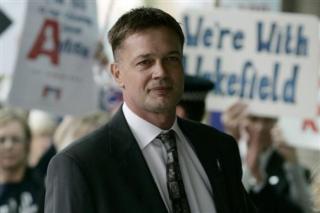 Andrew Wakefield
The doctor who sparked the "MMR scare" and a hero of the anti-vaccination movement, Andrew Wakefield, has been struck from the medical register in the United Kingdom by the General Medical Council after being found guilty of serious misconduct. The GMC found that he had "abused his position of trust" and "brought the medical profession into disrepute" through "multiple separate instances of serious professional misconduct". The Guardian reports:
Andrew Wakefield, the doctor at the centre of the MMR scare, has been struck off the medical register after being found guilty of serious professional misconduct.
He was not at the General Medical Council (GMC) hearing to receive the verdict on his role in a public health debacle which saw vaccination of young children against measles, mumps and rubella plummet.
The GMC said he acted in a way that was dishonest, misleading and irresponsible while carrying out research into a possible link between the measles, mumps and rubella (MMR) vaccine, bowel disease and autism.
British Chiropractic Association drops libel action against science writer after losing key issue in Appeals Court
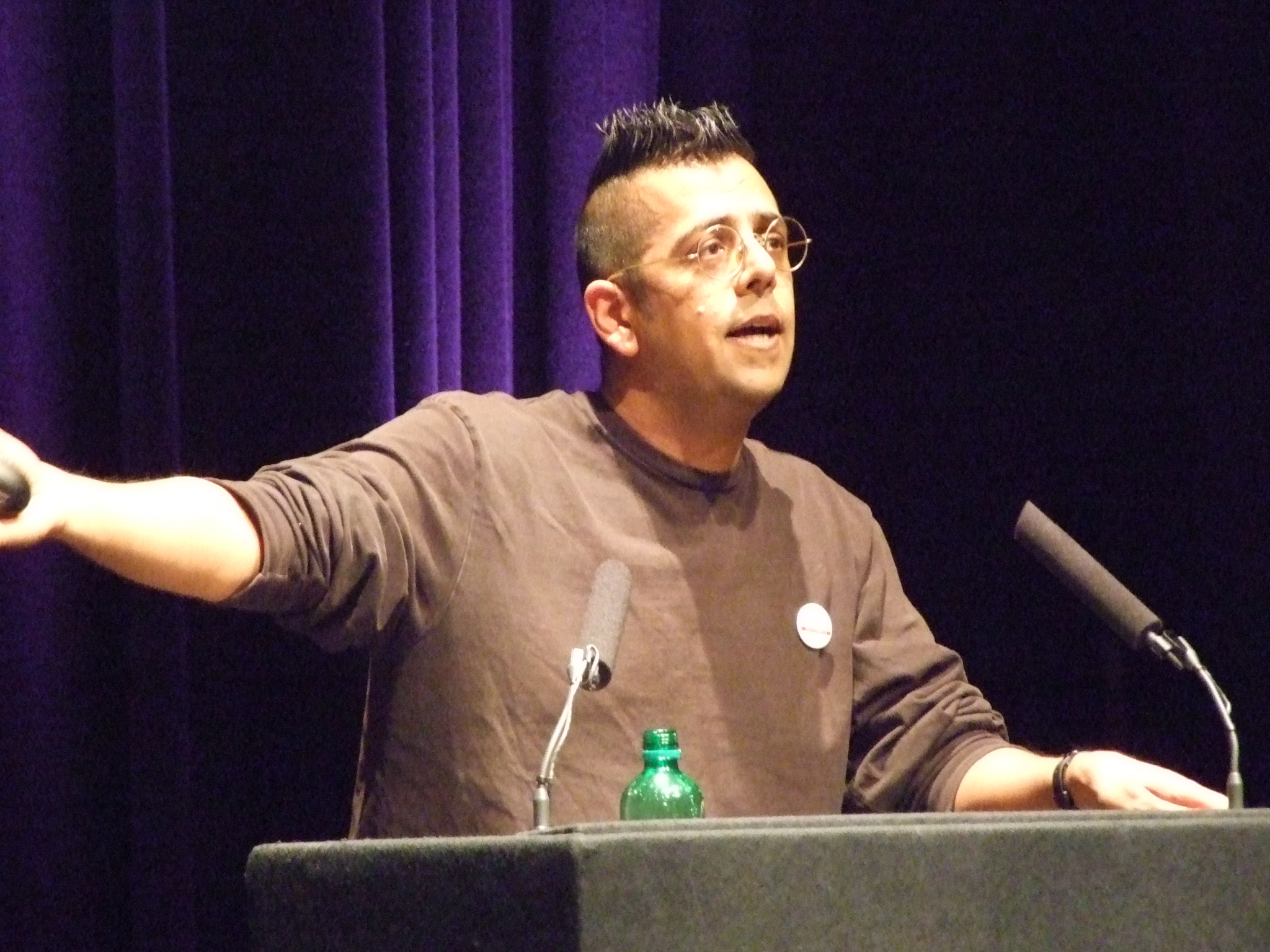 Simon Singh: Image credit: Gaius Cornelius (CC-A-SA)We reported previously on the libel action the British Chiropractic Association won in a lower court against esteemed British science writer Simon Singh after he called their claims that chiropractic could treat childhood diseases "bogus". The lower court had found that his statements were statements of fact, and that he therefore had to prove that the BCA knew that their claims were false when they made them. They have now abandoned their case against Singh after he won a key argument on appeal, namely that his article constituted comment and not statements of fact. Read more »
Elsevier issues ultimatum to Medical Hypotheses editor
In a stunning indictment of the pseudoscience published in Medical Hypotheses, the journal's publisher has issued an ultimatum to the editor: implement peer review or resign. This comes after the retraction of two AIDS denialist papers that the journal published, which were unanimously rejected by five reviewers in a process managed by The Lancet. The papers, “HIV-AIDS hypothesis out of touch with South African AIDS: A new perspective” by Peter Duesberg and “AIDS denialism at the ministry of health” by Marco Ruggiero, caused great concern in the scientific community and several prominent AIDS researchers wrote to the publisher expressing their concern. The retractions and Elsevier's decision to implement peer review at the journal will no doubt be held up by denialists as evidence of "censorship," but in fact illustrates that "dissident science" does not stand up to the scrutiny of peer review. Medical Hypotheses does not conduct peer review and had under the leadership of its present editor, Bruce Charlton, become a haven for pseudoscience of various kinds, including AIDS denialism.
Below are two reports on the publisher's steps to reform Medical Hypotheses.
Zoë Corbyn writes in Times Higher Education:
The editor of the journal Medical Hypotheses has been given until 15 March either to implement changes to adopt a traditional peer-review system, or to resign.
He has also been told that even if he stays with the journal, his contract will not be renewed at the end of the year.
As Times Higher Education reported in January, publisher Elsevier is attempting to rein in its unorthodox journal, which publishes papers on the basis of how interesting or radical they are rather than using peer review, after it published a paper last July that denied the link between HIV and Aids.
Debunking Delusions - New book by Nathan Geffen
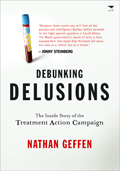 AidsTruth contributor and a leader of the Treatment Action Campaign, Nathan Geffen, has published a new book documenting AIDS denialism and the related quackery in South Africa titled Debunking Delusions: The Inside Story of the Treatment Action Campaign. We will publish a full review soon. More information can be found at the book's website. Below is the publisher's summary of the book.
Summary
One of the great, iconic struggles for social justice in the 21st century has been the campaign of the TAC against state-supported Aids denialism in South Africa. This struggle between activists, scientists and health workers, on the one hand, and a strange alliance of dissidents, quacks and political leaders, on the other, is here recounted in absorbing and dramatic detail for the first time by an insider. In his book Nathan Geffen, one of the TAC leaders, describes how early on in its life the organisation discovered that the greatest obstacle to AIDS treatment was in fact the South African government’s denialism. Not only did this extend to a reluctance to provide antiretroviral treatment to AIDS patients but also to support of a host of quacks and denialists who operated freely in the country to sow suspicion and confusion about the efficacy of standard medical treatment of AIDS. The most notorious of these were the German vitamin seller, Dr Matthias Rath, who along the way sued The Guardian of London and lost his case, and the Dutch nurse Tine van der Maas. It was the TAC that, as a result of a court case it brought against Rath, managed to stop his operations in South Africa; and it was the TAC, once again through legal means, that put pressure on the South African government to roll out an antiretroviral programme throughout the country. Geffen describes not only the TAC’s response to the puzzling intransigence of government and the spellbinding nonsense of dissidents, but the thought, strategy and discussion that lay behind the organisation’s major decisions. The story of the TAC’s campaign is one of the great triumphs of citizen activism for social justice and human rights. Read more »
Junk Science Kills
Elizabeth M. Whelan writes in the New York Post:
The media gave big headlines to this week's stories on a prestigious British medical publication's retraction of an article that had claimed to show a causal link between standard childhood vaccinations (measles, mumps and rubella) and autism.
Yet the coverage of the Lancet affair didn't truly convey the outrageousness of the original publication or the gravity of its consequences -- consequences long festering, since the paper was published not last week but 12 years ago.
Many of us in the scientific community recognized the "study" as junk when it appeared in 1998. Even before we learned of then-unknown ethical failings by its lead author, we knew the study was based on a tiny population of only 12 children. More, it relied on a novel methodology that assumed some bizarre, previously unheard of, association between children's autism and their manifestation of intestinal problems.
Nonetheless, the media back then seized on this story from a prestigious medical source -- and the scare picked up steam when TV appearances by actress Jenny McCarthy and a Rolling Stone article by Robert Kennedy Jr. blared word of the putative dangers of vaccines.
Salon.com: The autism-vaccine lie that won't die
Rahul K. Parikh, M.D. writes on Salon.com:
The media trumpeted an irresponsible study, ensuring that its nasty legacy thrives
Feb. 05, 2010
This week, Dr. Andrew Wakefield's now infamous study linking the MMR vaccine to autism was finally retracted by the prestigious Lancet medical journal. The move came days after medical officials in the United Kingdom found the doctor guilty of multiple ethics violations. For doctors, this is a victory -- but a bittersweet one.
As a pediatrician, I grapple daily with what Wakefield wrought: parents who are twisted in knots -- to the point of tears -- about whether to immunize their child. In the 12 years since the publication of Wakefield's study, 10 of his fellow co-authors have denounced him, and an unremitting series of revelations have exposed just how corrupt his motives and methods were. Most important, multiple studies verified there is no link between the MMR (or any other) vaccine and autism. Meanwhile, infectious diseases once confined to medical history have broken out in our communities. To say the retraction is criminally overdue is an understatement.
Further, even as Wakefield's research is expunged from the scientific record, what he spawned -- a well-funded, vocal, even rabid movement -- will remain. Without him, poster girl Jenny McCarthy would have been abandoned in the MTV archives instead of smugly crowing to Time magazine, "I do believe sadly it's going to take some diseases coming back to realize that we need to change and develop vaccines that are safe. If the vaccine companies are not listening to us, it's their f___ing fault that the diseases are coming back. They're making a product that's s___ ." And anti-vaccine darling David Kirby would split his time between running a P.R. firm and writing pithy articles about art and aircraft instead of turning speculation and rumor into a Kennedy-esque vaccine-autism conspiracy theory. Finally, Wakefield himself stands to be completely unaffected by both the U.K. medical community (which could revoke his license to practice there) and the Lancet's decision. He long ago settled here in the U.S. and successfully peddles his views through his Thoughtful House autism center in Texas.
Wakefield, who linked MMR vaccine to autism, found to have shown "callous disregard" for children
The anti-vaccine movement, which shares characteristics with AIDS denialism (both like to blame pharmaceutical conspiracies) and which was originally based on claims by British surgeon Andrew Wakefield, has been dealt a decisive blow by a finding against Wakefield by the General Medical Council. Caims that the MMR vaccine was linked to autism have since been shown to be baseless, but are still promoted by some, including by groups linked to AIDS denialism. The Guardian reports:
Dr Andrew Wakefield, the expert at the centre of the MMR controversy, "failed in his duties as a responsible consultant" and showed a "callous disregard" for the suffering of children involved in his research, the General Medical Council (GMC) has ruled.
Wakefield also acted dishonestly and was misleading and irresponsible in the way he described research that was later published in the Lancet medical journal, the GMC said. He had gone against the interests of children in his care, and his conduct brought the medical profession "into disrepute" after he took blood samples from youngsters at his son's birthday party in return for payments of £5.
The Lancet: a new South Africa takes responsibility
The Lancet has hailed the new approach evident in South Africa in which the government has decisively turned away from the AIDS denialism associated with former President Thabo Mbeki.
The Lancet, Volume 374, Issue 9705, Page 1867, 5 December 2009
HIV/AIDS: a new South Africa takes responsibility
On Dec 1 the usual activities surrounding World AIDS Day will take on a special significance for South Africans. In a high-profile event in Pretoria, the South African National AIDS Council (SANAC) is bringing together people who work in HIV/AIDS, those who have been affected by HIV, and government officials, including President Jacob Zuma, Deputy President and SANAC Chair Kgalema Motlanthe, and the Minister of Health Aaron Motsoaledi. Zuma will give a televised address on HIV/AIDS to the nation. Under the motto “I am responsible, we are responsible, South Africa is taking responsibility”, a new era in the country's response to HIV/AIDS is being publicly heralded. In a key-messages booklet, SANAC calls on everyone to know their HIV status by frequent testing; on communities to stop stigma and discrimination against people living with HIV; and on itself to ensure that the government is taking responsibility for people to receive counselling, provide condoms, and give access to treatment for tuberculosis and HIV.
Already on Oct 29, in what has been widely praised as a landmark speech, Zuma left no doubt about the decisive departure from the previous government's stance of denialism and indifference: “South Africa must work harder to implement the national strategy to tackle HIV/AIDS…all South Africans need to know their HIV status and be informed of the treatment options available to them…there should be no shame, no discriminations, and no recriminations”. The non-governmental organisation Treatment Action Campaign called Zuma's speech, which came almost 10 years after Thabo Mbeki made his HIV/AIDS denial clear before the same National Council of Provinces, as “one of the most important speeches in the history of AIDS in South Africa”. Read more »
Killer syndrome: The Aids denialists
Rob Sharp reports in The Independent on the presistence of AIDS denialism
A middle-aged man walks into an East London café and apologises for being late. With his clipped hair and bus-driver's uniform of thick overcoat, shirt, and branded tie, he looks like any other public service employee. But soon he delivers a speech of startling ferocity against the medical establishment.
Mike explains that he runs a London-based health website on which he posts articles and links to information that questions whether HIV causes Aids, disputes the existence of HIV, and denies the fact that unprotected sex helps to spread it. He offers support for those who, he says, are "negotiating with medical authorities over taking a different approach to dealing with their circumstances." He claims to get thousands of hits on his site and has helped advise several people who have been diagnosed with HIV and are launching legal action against their local health authorities, in the belief that they have been unfairly treated by the doctors who are trying to help them.
